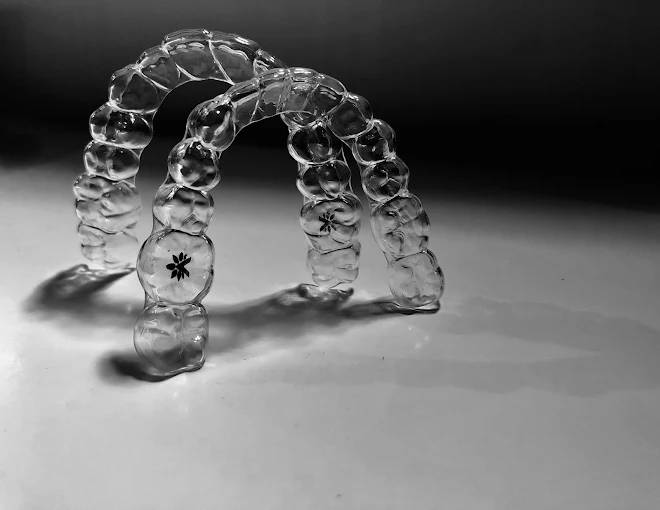

Clear aligner treatment is often misunderstood as a simple cosmetic solution. In reality, it is a complex orthodontic system that combines biology, material science, digital planning, and patient behavior. To achieve predictable tooth movement, every stage of aligner therapy must follow strict biomechanical and clinical principles.
Periodontal Ligament Response and Bone Remodeling
Teeth are not fixed directly into bone. They are suspended in a microscopic space called the periodontal ligament (PDL). This ligament absorbs force and transfers it to the surrounding bone. When aligners apply pressure, cells within the PDL react by signaling bone breakdown on one side and bone formation on the other.
Clear aligners work best because they apply light, continuous forces. These forces are closer to natural chewing forces and reduce trauma to tissues. Excessive force, which can happen with poor treatment planning, can damage roots, slow movement, or cause pain.
This biological process explains why aligners must be worn consistently and why skipping wear delays treatment.
Force Systems Used in Clear Aligners
Unlike braces, which apply constant force through wires, aligners use programmed force delivery. Each aligner is designed to slightly change tooth position using controlled displacement.
There are three main force types involved:
- Translational forces for straight movement
- Rotational forces for turning teeth
- Torque forces for root positioning
Clear aligners must balance all three forces correctly. If torque is insufficient, teeth may tip instead of moving bodily, leading to unstable results.
Book Your Clear Aligner Consultation Today!
Staging Strategy and Tooth Movement Sequencing
Staging is the backbone of aligner treatment. Each aligner moves teeth in small increments to allow biological adaptation. Moving too many teeth at once increases force load and reduces accuracy.
Modern aligner planning often follows segmented movement, where teeth are moved in groups rather than all at once. For example, spacing may be closed before correcting bite alignment, or rotations may be completed before vertical movements.
Proper sequencing improves tracking and reduces the need for refinements.
Attachments and Their Biomechanical Purpose
Attachments are not placed randomly. Their design is based on force vectors. A flat attachment provides grip, while beveled or optimized attachments direct force in a specific direction.
Attachments allow aligners to:
- Control root position
- Prevent unwanted tipping
- Improve rotational accuracy
- Support vertical movements
Without attachments, aligners behave like removable shells with limited force control.
Aligner Material Science and Elastic Recovery
Aligner materials must show elastic recovery, meaning they return to their original shape after deformation. This property ensures force is delivered gradually over time.
Poor-quality materials lose elasticity quickly, reducing force and delaying movement. Multi-layer materials are engineered to release force slowly, improving comfort and efficiency.
Temperature, saliva, and chewing habits can affect material behavior, which is why aligners must be replaced on schedule.
Interproximal Reduction (IPR) in Aligner Therapy
IPR is a controlled removal of small amounts of enamel between teeth to create space. In aligner therapy, IPR is often preferred over tooth extraction in mild to moderate crowding cases.
IPR must be planned carefully to:
- Maintain tooth health
- Preserve enamel strength
- Prevent sensitivity
Incorrect IPR can compromise results and patient comfort.
Tracking Errors and Clinical Corrections
Tracking failure occurs when teeth do not move as planned. Common causes include poor compliance, incorrect attachment placement, or inaccurate scans.
Early detection is critical. Clinicians may pause treatment, rescan, or add refinement aligners to regain accuracy. Ignoring tracking issues leads to incomplete correction and unstable outcomes.
Occlusal Considerations and Bite Management
Aligners also affect bite mechanics. Poor planning can create posterior open bites or uneven contacts. Bite ramps and staged bite correction are used to guide proper occlusion.
Balanced occlusion is essential not only for aesthetics but also for chewing efficiency and joint health.
Role of Compliance in Biological Success
From a clinical perspective, compliance is not optional. Teeth respond to consistent force patterns. Irregular wear causes repeated force interruption, slowing bone remodeling.
Patients must wear aligners for the recommended hours daily to maintain biological momentum and treatment predictability.
Retention and Long-Term Stability
Orthodontic movement creates temporary instability in bone and ligament structures. Retainers are required to allow tissues to stabilize in the new position.
Lack of proper retention is the leading cause of relapse, regardless of treatment method.