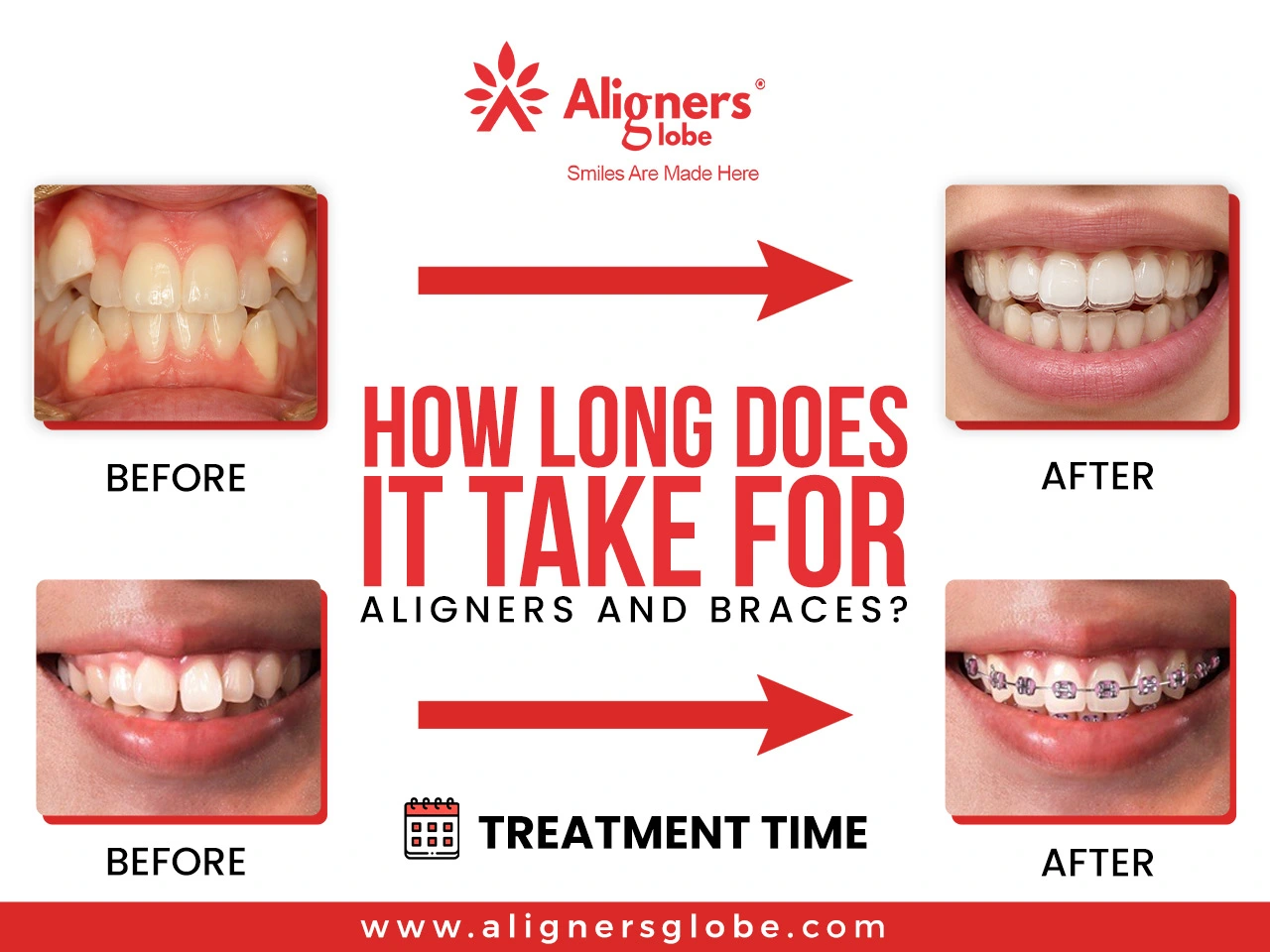
When most people think of straightening their teeth, they immediately imagine metal braces, wires and monthly doctor visits. This image is enough to make many people put off their treatment forever. However, teeth alignment without braces (using clear aligners) has been available in Pakistan for over a decade and is growing fast. This guide explains exactly what that means, how it works, who can get it and what to expect from start to finish.
Quick Answer
| Question | Answer |
| What is teeth alignment without braces? | Using removable clear plastic trays (aligners) instead of fixed metal or ceramic brackets to move teeth |
| How do clear aligners work? | Custom trays apply precise pressure to specific teeth, guiding movement through a planned sequence |
| Who is a good candidate? | Adults and teenagers with mild to moderate crowding, spacing, rotations or bite issues |
| What does it cost in Pakistan? | Rs. 189,000 fixed nationwide with the Aligners Globe Box (retainers included) |
| How long does treatment take? | Five to fourteen months depending on case complexity |
What Without Braces Actually Means
The term covers a specific category of orthodontic treatment. Braces, in the traditional sense, are fixed appliances brackets bonded to tooth surfaces with an archwire threaded through them. They stay on your teeth twenty four hours a day, removed only by the orthodontist at the end of treatment.
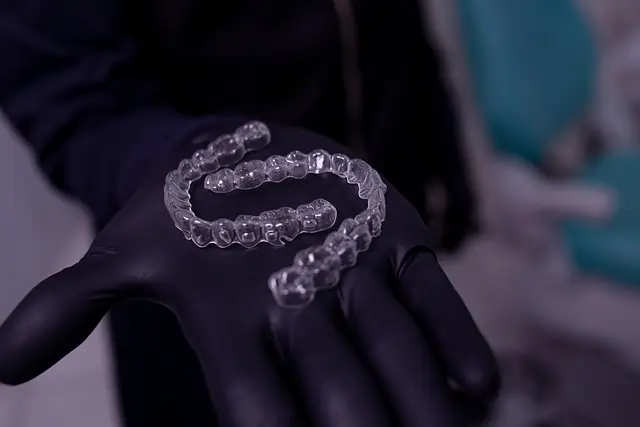
Teeth alignment without braces means the appliance is removable. No bonded brackets. No threaded wire. Nothing permanently attached to tooth enamel during treatment. The movement happens through a sequence of custom fabricated clear plastic trays, each one slightly different from the last, each one worn for about fifteen days before moving to the next.
What does not Count
Teeth whitening does not straighten teeth. Dental veneers change the appearance of teeth without moving them. Retainers hold teeth in position after orthodontic treatment they do not create movement. ‘Teeth alignment without braces’ refers specifically to an active orthodontic treatment that repositions teeth. Clear aligners are the only removable system that does this.
How Clear Aligners Move Teeth: The Biology
The mechanism isn’t magic. It’s the same biological process that metal braces use just delivered differently.
Bone Remodelling Under Pressure
Teeth are embedded in the jawbone through a cushioning layer of tissue called the periodontal ligament. Apply sustained gentle pressure to a tooth and that ligament transmits the force to the surrounding bone. The bone on the pressure side gradually dissolves (resorption). On the opposite side, new bone forms (deposition). The tooth migrates. This cycle of resorption and deposition is how any orthodontic appliance moves teeth braces, aligners or otherwise.
How Each Tray Creates Movement
Every tray in an aligner sequence is fabricated slightly out of alignment with your current tooth positions. Putting it in applies controlled pressure to the specific teeth that need to move that step. Over fifteen days of consistent wear, the bone remodels enough that those teeth settle into the tray position. The next tray starts the next planned movement. Over a sequence of dozens of trays, teeth travel from their starting position to the planned final position.
Why Consistent Wear Matters So Much
Remove the pressure and the remodelling slows. Bone resorption and deposition both depend on sustained load. Wearing aligners twelve to fourteen hours instead of twenty two means the planned movement does not happen on schedule. The next tray goes in before the bone has finished settling, applying incorrect forces. Over a few months this compounds. Treatment stalls, extends or produces a result different from the plan. The twenty two hour rule isn’t arbitrary it’s the minimum for the biology to work.
What Conditions Clear Aligners Treat in Pakistan
Not every misalignment case is the same. Knowing where aligners work well and where they do not sets realistic expectations before a consultation.
Crowding
Crowded teeth occur when the jaw does not have enough space for teeth to sit in their natural positions. Mild to moderate crowding is one of the most common cases that clear aligners handle well. The planned movement gradually spaces teeth into their correct positions without extraction in most mild to moderate presentations.
Spacing and Gaps
Extra space between teeth whether a diastema between the two upper front teeth or generalised spacing across the arch responds well to aligner therapy. The trays close gaps systematically from the planned digital simulation outward.
Mild to Moderate Overbite and Underbite
Overbite (upper teeth significantly overlapping lower) and underbite (lower teeth sitting in front of upper) in their milder forms are treatable with aligners when the discrepancy is primarily dental rather than skeletal. Significant jaw structure differences require a different approach.
Rotated and Tipped Teeth
Individual teeth that have rotated on their axis or tipped out of alignment can be repositioned through the sequential tray system. Attachments small tooth coloured composite buttons bonded to specific teeth are sometimes used to give the tray grip on awkward movements.
What Aligners do not Treat Well
Severe skeletal discrepancies between the upper and lower jaw require surgical correction or fixed appliances that apply forces aligners can not replicate. Cases where extraction is part of the treatment plan need careful evaluation. Significant vertical bite issues are harder to manage with trays than with fixed brackets. Your provider tells you clearly which category your case falls into after examining your scan not before.
The Aligners Globe Box: Clear Treatment in Pakistan
Aligners Globe produces and distributes the Aligners Globe Box a complete custom clear aligner treatment package available at a fixed Rs. 189,000 nationwide. The box is delivered through certified Aligners Globe Providers: orthodontists and trained dental consultants verified by the brand in 14+ cities across Pakistan.
What’s in the Box
- Digital scan using Dentsply Sirona Primescan or putty impression at your Provider’s clinic
- Full 3D treatment simulation showing projected movement before fabrication begins
- Complete custom tray set from CE certified, FDA approved, BPA free medical grade plastic
- Two pairs of removable post treatment retainers at no extra cost
- Treatment supervised by a certified Aligners Globe Provider
- 24/7 patient and technical support from Aligners Globe directly
The Material Difference
Medical grade plastic certified to CE and FDA standards performs differently from standard grade alternatives. Better stain resistance over months of daily wear. Less prone to cracking under normal use. More consistent force delivery across the tray surface. Aligners Globe uses BPA free materials throughout. If a clinic is quoting you on clear aligners and can not tell you the material certification, ask specifically it matters over a twelve month treatment.
Fixed Nationwide Price
Rs. 189,000 does not change based on city, clinic or case complexity within the treatable range. A patient in Quetta pays the same as a patient in DHA Lahore. The price includes retainers. That’s relevant because post treatment retainers which are non negotiable if you want to keep the result cost PKR 10,000 to PKR 22,000 separately at most Pakistani clinics.
The Treatment Process Step by Step
Clear aligner treatment follows a consistent process regardless of which certified provider you see in Pakistan.
- Initial consultation: The provider examines your teeth and gums, checks your bite and reviews your dental and medical history. Any active gum disease or significant decay is addressed before orthodontic treatment begins.
- Scan or impression: A digital intraoral scan or physical putty impression records the current position of your teeth in three dimensions. This is the raw data the treatment plan is built on.
- 3D treatment simulation: Software generates a virtual simulation of your planned tooth movement tray by tray from start to finish. You see the projected final position before agreeing to treatment.
- Tray fabrication: Your custom tray sequence is manufactured from medical grade plastic to the dimensions of the treatment plan. Each tray in the sequence is slightly different from the last.
- Tray delivery and fitting: Your provider places the first few trays, confirms fit and explains the switching schedule and wear requirements.
- Home tray switching: After the initial fitting, you switch trays at home on the provider’s schedule typically every fifteen days. No monthly adjustment visits required.
- Monitoring appointments: One or two check in visits during treatment confirm teeth are tracking to plan. Far fewer appointments than conventional braces.
- Completion and retention: Once the final tray is complete, retainers are worn to maintain the result. The Aligners Globe Box includes two pairs at no extra cost.
Compliance and Lifestyle: What Changes During Treatment
The biggest practical difference between clear aligners and conventional braces isn’t the appearance. It’s what changes in your daily routine.
The Removal Habit
Trays come out before every meal and every drink except plain water. Then back in after brushing. That habit remove, eat, brush, replace becomes automatic within the first two weeks for most patients. It takes about thirty seconds each time. What it gives you: no food restrictions whatsoever. Hard foods, sticky foods, the things that chip metal brackets none of that applies. A wedding buffet, an office lunch, a family dinner you eat normally.
Cleaning
The tray and the teeth need cleaning together. Brush teeth before replacing the tray after meals. Rinse the tray under cool water each time it’s removed. A soft toothbrush with plain liquid soap handles the deeper clean toothpaste is too abrasive for clear plastic and scratches the surface over time. Those scratches harbour bacteria and cloud the tray. Once a week, soaking in a dissolved denture cleaning tablet keeps it fresh throughout the fifteen day cycle.
Storage
The tray case is not optional. Trays left on tables, wrapped in tissues or placed in pockets get thrown away, stepped on or warped by heat. Pakistan’s summer temperatures particularly in parked cars in Lahore or Karachi are enough to deform the plastic. Case in pocket or bag, always. Lost trays delay treatment and cost replacement fees.
The Social Side
Most people can not tell you are wearing aligners from normal conversational distance. Remove for photos if you want. No one at work notices. The confidence impact of not having visible metal hardware during a twelve month treatment is real for adults in professional and social settings. Weddings, job interviews, client presentations none of them require a metal bracket explanation.
Other Methods of Teeth Alignment Without Fixed Braces
Clear aligners are the primary and most effective option for active teeth alignment without braces. But two other approaches come up in patient conversations and deserve a clear explanation.
Ceramic Braces Less Visible, Still Fixed
Ceramic brackets are tooth coloured or translucent. Same mechanism as metal fixed to the front of teeth, archwire threaded through. From conversational distance they’re less noticeable than metal. Up close, they’re visible. They do not qualify as ‘braces free’ because they’re still bonded appliances. But for patients who need braces and want reduced visibility, ceramic sits between metal and clear aligners on the aesthetic spectrum. They stain, particularly with tea and coffee. Monthly adjustment visits still apply.
Lingual Braces Hidden but Fixed
Bonded to the tongue facing surface of teeth. Invisible from outside. Still a fixed appliance. Still requires monthly adjustments. Still not removable. The ‘without braces’ conversation does not apply here either lingual braces are as fixed as metal ones, just positioned differently. What they share with aligners is invisibility from the front. What they do not share is the removable lifestyle.
Retainers Maintenance, Not Treatment
Retainers hold teeth that have already been moved. They do not create movement. A patient who never had orthodontic treatment and puts in a retainer isn’t going to straighten anything. Retainers are retention appliances, not active orthodontic tools. This distinction matters because some patients arrive at consultations expecting a retainer to fix misalignment it won’t.
Clear Aligners and Pakistani Daily Life: What Actually Changes
Most aligner guides are written for a generic Western patient. Pakistan’s daily routine, diet and social calendar raise specific questions worth answering directly.
Roza and Intermittent Fasting
During Ramadan, aligners are typically worn during the fasting hours when no food or drink is consumed. They come out for iftar and sehri, teeth are cleaned and trays go back in. The twenty two hour wear requirement is easier to meet during fasting hours. Most certified providers in Pakistan discuss Ramadan specific wear schedules at the start of treatment for patients who observe.
Chai, Kahwa and Hot Drinks
Pakistan’s tea culture is real. Several cups of chai or kahwa daily is the norm for most adults. The rule is straightforward: remove the trays before any hot drink. Hot liquids warp the plastic. Chai with milk and sugar left against the tray surface stains it quickly. The habit of removal takes about a week to become automatic. It does not meaningfully disrupt the daily routine once it’s established.
Weddings and Extended Family Events
Pakistani weddings span multiple days. Mehndi, baraat, valima each involving long meals, photography and social interaction across full days. Aligners come out for eating. For photos. They go back in during the non eating hours of the event. The flexibility this gives compared to wearing visible metal brackets across a multi day family function is a practical advantage that matters in the Pakistani social context. (Put honestly: nobody wants to be in wedding photos with metal braces if there is an alternative.)
Cities Outside Lahore and Karachi
One concern that comes up repeatedly: what if I live in Multan, Gujranwala, Bahawalpur or another city without a specialist orthodontic hub? Aligners Globe Providers operate in 14 cities across Pakistan. Tray switching happens at home. Monitoring appointments are minimal one or two during the full treatment rather than monthly. The low visit model makes aligner treatment practical for patients in smaller cities who would face genuine difficulty attending monthly adjustment appointments at a clinic far from home.
About the Author
Aligners Globe Team Dr. Omer Farooq Ahmad, CEO of Aligners Globe and founder of Dental Art, leads the clinical team behind this content. B.D.S with Distinction (2003), F.I.C.D (USA) and F.I.C.O.I (USA) fellowships, MSc (PG). Director of the Pakistan Academy of Advanced Dentistry, recognised by the University of Health Sciences. He appears as a dental expert on PTV, 92 News HD, 7 News, ATV, Neo News, GNN, Lahore News, Lahore Rung and City 42.
How to Start Clear Aligner Treatment in Pakistan
Use this process regardless of which provider you consult.
- Find a certified provider in your city: Check the Aligners Globe provider directory at alignersglobe.pk/best aligners dentist in lahore/ or the franchises page for your city.
- Book a consultation: Confirm whether the consultation fee is charged or waived when treatment proceeds. Ask before attending.
- Get a scan and see the simulation: No treatment plan is valid without a proper scan. The 3D simulation should show you the projected movement before any payment is agreed.
- Confirm suitability honestly: Ask your provider directly whether your case is fully treatable with aligners or whether any limitations exist. A good provider answers this without hesitation.
- Confirm what’s included: Retainers, monitoring visits, refinement policy. In writing. Before any deposit is paid.
- Start and follow the wear schedule: 22 hours minimum daily. Case always with you. Contact your provider promptly for any fit issue or lost tray.
Wrap Up
Teeth alignment without braces in Pakistan is a real, clinically sound option for most adults and teenagers with mild to moderate misalignment. Clear aligner therapy delivers the same tooth movement as conventional braces through a removable, nearly invisible system that works around Pakistani daily life rather than against it. The Aligners Globe Box makes this option available at Rs. 189,000 fixed nationwide with retainers included and minimal clinic visits through certified providers in 14+ cities.
Book a consultation and see the 3D simulation of your case before committing to anything.
Can teeth be straightened without braces in adults?
Yes. Clear aligner therapy works for adults regardless of age. Bone remodelling the biological mechanism that allows teeth to move continues throughout adult life. Adult bone is denser than in teenagers, which means movement can be slightly slower. Treatment timelines sometimes extend by a few months for adults compared to younger patients at equivalent case complexity. there is no upper age limit for aligner treatment.
How long do clear aligners take to work in Pakistan?
Timeline depends entirely on how much movement is needed. Simple single arch cases with mild crowding or a single gap can complete in five to seven months. Moderate cases across both arches run nine to fourteen months. More complex presentations extend beyond that. Your provider gives a specific projected timeline based on the 3D treatment plan after your scan not a generic estimate before examination.
Are clear aligners painful?
Mild pressure is normal for the first day or two after switching to a new tray. The feeling is similar to mild soreness rather than sharp pain. It’s the tooth movement starting. Most patients adapt to the sensation quickly and describe it as noticeably less uncomfortable than the soreness after metal brace tightening visits. No brackets irritate the inner cheeks. No sharp wire ends. Sensitivity during the adjustment period is temporary.
Can clear aligners fix overbite without surgery in Pakistan?
Mild to moderate overbites where the issue is primarily tooth position rather than jaw structure are treatable with clear aligners. Significant skeletal overbites involving the jaw bones themselves may require surgical correction or fixed appliances. Your orthodontist determines which category your overbite falls into during the clinical examination using X ray analysis and probing. This distinction can not be made without proper diagnostic records.
Do you have to wear aligners all day?
22 hours minimum per day. The remaining two hours are for eating, drinking anything other than water and cleaning. That’s the minimum for the planned bone remodelling to stay on schedule. Patients who consistently wear aligners fewer hours see extended treatment timelines, reduced effectiveness or a final result that does not match the plan. Most patients find the habit straightforward once established the tray goes in after every meal and comes out only for eating.
Can I get clear aligners in Lahore, Karachi and Islamabad?
Yes. Aligners Globe Providers operate in all three cities and across 11 additional cities in Pakistan. The Aligners Globe Box price is fixed at Rs. 189,000 regardless of which city you receive treatment in no city premium applies.
What happens if clear aligners do not work?
Aligners that aren’t tracking to plan where teeth aren’t following the projected movement are identified at monitoring appointments. Refinement trays can be added to correct course. In some cases, a different approach may be recommended if the case proves more complex than the initial scan suggested. A certified provider discusses this openly rather than continuing a non tracking treatment plan. The honest answer is suitability assessment before treatment starts is the best protection against this outcome.
Are clear aligners better than braces for teenagers?
For teenagers whose jaw development is sufficiently advanced, clear aligners work clinically as well as braces for mild to moderate cases. The practical difference is compliance. Fixed braces work regardless of patient cooperation. Aligners require 22 hours of daily wear and the discipline to follow through consistently. Teenagers who are honest about their habits and genuinely committed to the wear schedule are good candidates. Teenagers who know they’ll remove trays frequently are better served by fixed brackets.
How do I clean clear aligners in Pakistan?
Rinse under cool water every time you remove them. Brush with a soft toothbrush and a small amount of plain liquid soap not toothpaste which scratches the plastic. Once a week, soak in a dissolved denture cleaning tablet for five to ten minutes, then rinse well. Store in the hard case provided whenever the tray is out of your mouth. Avoid leaving trays in hot cars direct sunlight or wrapped in tissues. The cleaning routine takes about two minutes daily once it becomes habitual.
Is it too late to straighten teeth as an adult in Pakistan?
No. Adults seek and complete orthodontic treatment successfully at every age. The motivations shift professional appearance, confidence oral health but the biological mechanism that allows teeth to move does not switch off after a certain age. Adult treatment can take slightly longer than teenage treatment at equivalent case complexity but the final result is the same. The question isn’t whether it’s too late. It’s whether your case is suitable, which only an examination can answer.