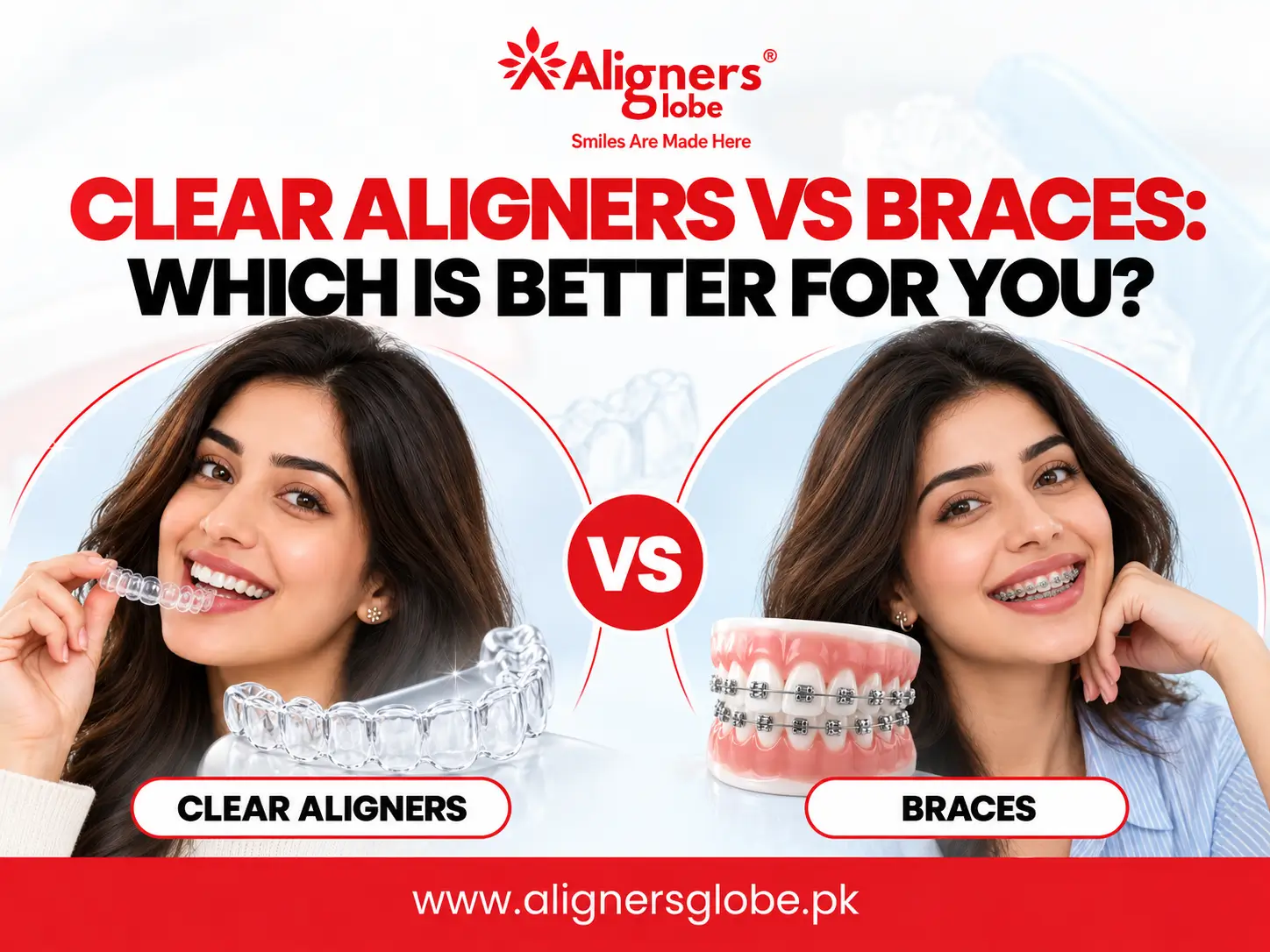
Clear aligners and traditional braces both straighten teeth using steady, controlled pressure, but they differ in how they look, how they feel, how you care for them, and the types of cases they treat best.
Clear aligners are removable, nearly invisible trays suited to many mild to moderate cases. Traditional braces are fixed brackets and wires that can handle the full range of cases, including complex ones.
The better option depends on your dental needs, your lifestyle, your budget, and what a qualified dentist recommends after assessing your teeth.
Quick Answer: Clear Aligners vs Braces
- Clear aligners are removable, nearly invisible, and comfortable, and they suit many mild to moderate cases.
- Traditional braces are fixed in place and can treat mild to complex cases, including difficult bite and alignment problems.
- Aligners are easier to eat with and clean around because you take them out.
- Braces do not rely on wear time, so they work well for patients who may forget to wear removable trays.
- Both usually take around 6 to 18 months, depending on the case.
- Both need a retainer afterward to hold the results.
- The right choice is decided with a dentist, based on your case and goals.
What Are Clear Aligners?
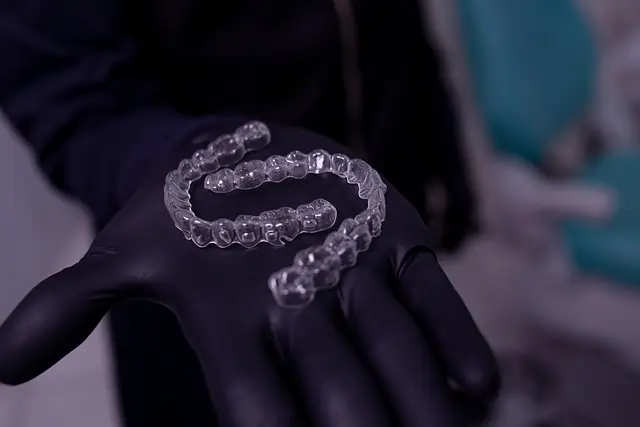
Clear aligners are thin, transparent trays made from medical-grade plastic that fit closely over your teeth. They are often called invisible braces or transparent braces because they are hard to notice when worn.
You wear a series of custom trays, each one moving your teeth a small step closer to their planned position. Because they are removable, you take them out to eat, drink anything other than water, brush, floss, and clean the trays.
What Are Traditional Braces?
Traditional braces use metal or ceramic brackets fixed to each tooth and connected by a wire. The dentist adjusts the wire over time, and that steady force guides the teeth into place.
Because braces are fixed and cannot be removed at home, they keep working around the clock without depending on how many hours you wear them. This makes them a dependable choice for complex cases and for patients who may struggle to wear removable trays consistently.
Clear Aligners vs Braces: Side-by-Side Comparison
| Feature | Clear Aligners | Traditional Braces |
| Appearance | Nearly invisible | Visible metal or ceramic |
| Removable | Yes | No |
| Eating | Remove before eating | Stay in place, some foods restricted |
| Cleaning | Easy, normal brushing and flossing | Extra care needed around brackets and wires |
| Comfort | No wires or brackets | Wires and brackets may irritate cheeks and lips |
| Wear discipline | Depends on wearing trays 20 to 22 hours a day | Works continuously, no wear time to manage |
| Case suitability | Many mild to moderate cases | Mild to complex cases |
| Visits | Fewer, often with remote monitoring | Regular in-clinic adjustments |
How They Work
Both treatments rely on the same basic principle: controlled pressure plus time equals gradual tooth movement.
Clear aligners apply gentle pressure through a sequence of trays. Each tray is slightly different from your current tooth position, so it nudges specific teeth toward their next planned step. You move to the next tray every one to two weeks.
Braces apply pressure through the wire and brackets. As the dentist tightens or changes the wire at each visit, the teeth continue moving along the planned path.
The science is the same. The difference is the delivery: a removable series of trays versus a fixed system of brackets and wires.
Appearance
For many people, this is the deciding factor.
Clear aligners are nearly invisible, which is why adults and working professionals often prefer them. Most people will not notice you are wearing them.
Braces are visible. Ceramic (tooth-coloured) brackets are less obvious than metal, but they can still be seen up close.
Comfort
Clear aligners have no sharp wires or brackets, so there is nothing to rub against your cheeks or lips. You may feel mild tightness for a day or two when you switch to a new tray, and that usually settles quickly.
Braces can occasionally irritate the inside of the mouth, especially in the early weeks, though dental wax and time usually help.
Eating and Everyday Life
With clear aligners, you remove the trays before eating, so there are no food restrictions. You simply clean your teeth and put the trays back in.
With braces, certain hard, sticky, or chewy foods are discouraged because they can damage brackets or wires.
The trade-off is discipline. Aligners only work if you wear them 20 to 22 hours a day. Braces do not depend on your memory, because they are always on.
Oral Hygiene and Cleaning
Clear aligners let you brush and floss normally, because you take them out. Keeping both your teeth and the trays clean is straightforward.
Braces need more attention. Food can collect around brackets and wires, so cleaning takes extra care and the right tools.
Treatment Time
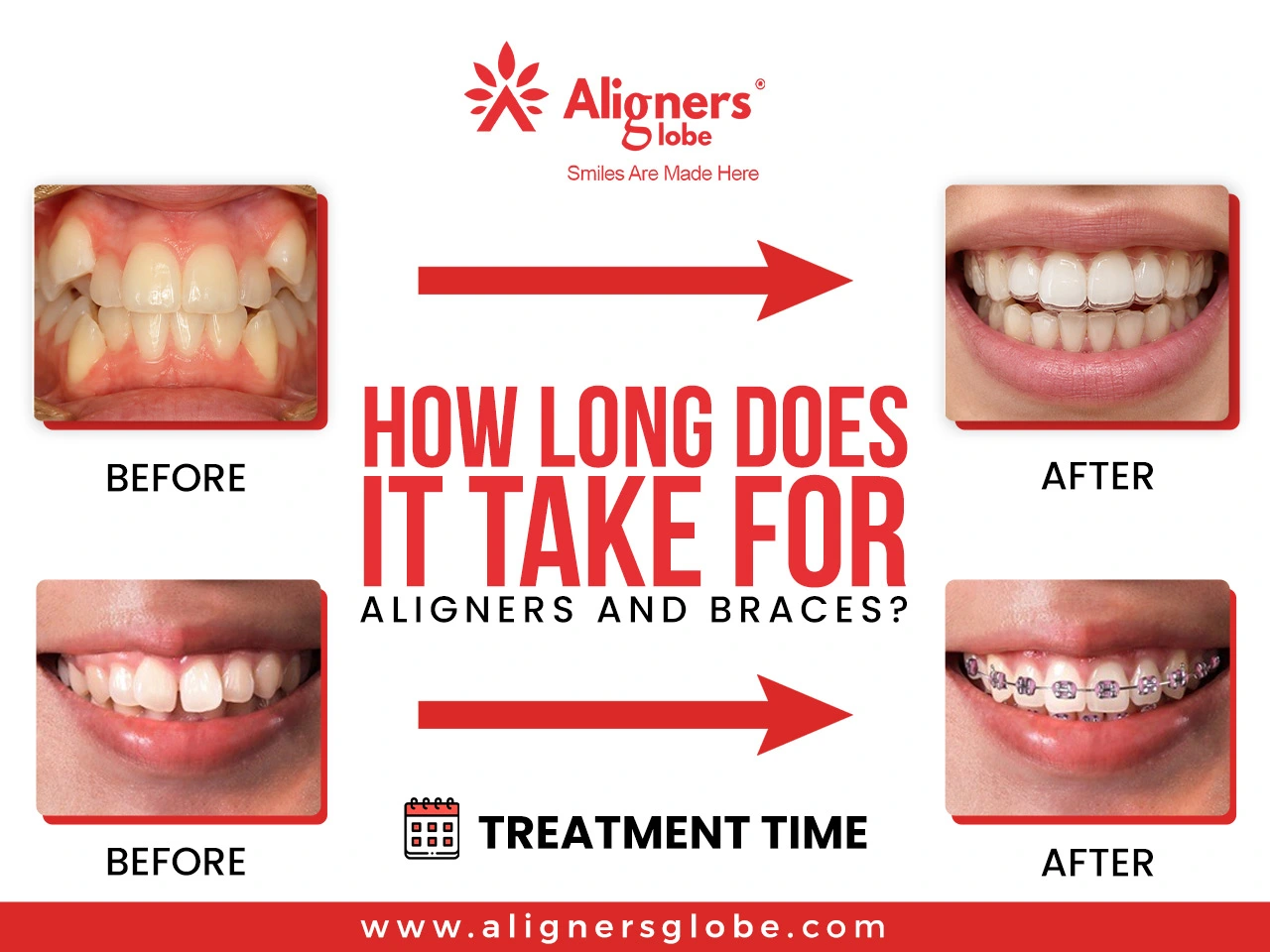
Both options commonly take around 6 to 18 months, depending on how much movement is needed and how closely you follow your treatment plan.
Simple cases, such as minor crowding or small gaps, may finish faster. Complex cases take longer with either method.
Which Cases Each One Treats
Clear aligners work well for many common concerns, including:
- Crowded or overlapping teeth
- Gaps between teeth
- Crooked or rotated teeth
- Mild to moderate bite issues
Braces can treat all of the above and are often recommended for more severe or complex bite and alignment problems.
A dentist is the only one who can confirm which option fits your specific case.
Cost of Clear Aligners vs Braces in Pakistan
Cost is often a deciding factor, and it varies by case complexity and the type of treatment.
With Aligners Globe, clear aligner treatment is a fixed price of PKR 189,000 nationwide, which covers the full custom tray set, digital planning, and retainers.
Traditional braces are usually priced in ranges rather than a fixed figure. As a general guide, metal braces often fall between PKR 80,000 and PKR 400,000, ceramic braces between PKR 200,000 and PKR 400,000, and lingual braces between PKR 250,000 and PKR 500,000, depending on the clinic and the case.
For current details, see the clear aligners and transparent braces pricing guide.
Which Is Better for You?
There is no single winner. The better treatment is the one that matches your case and your life.
Clear aligners may suit you if you:
- Want a nearly invisible option
- Prefer to remove your trays to eat and clean
- Have a mild to moderate case
- Can commit to wearing the trays 20 to 22 hours a day
Traditional braces may suit you if you:
- Have a complex bite or alignment problem
- Prefer a fixed system that does not rely on wear time
- Want an option that works continuously without daily discipline
The most reliable way to decide is a professional assessment, where a dentist reviews your teeth, your bite, and your goals, then explains your options.
Clear Aligners vs Braces in Pakistan
Both treatments are available across major cities in Pakistan, including Lahore, Karachi, and Islamabad.
Aligners Globe provides custom clear aligners with digital 3D planning and dentist-supervised care through a network of partner clinics. If you are weighing your options, you can explore:
- Invisalign and clear aligners in Pakistan
- Transparent braces and pricing
- Dental retainers
- Book a consultation
Frequently Asked Questions About Clear Aligners vs Braces
Are Clear Aligners as Effective as Braces?
For many mild to moderate cases, clear aligners can achieve results comparable to braces. For complex cases, braces may be more suitable. A dentist can tell you which option fits your situation.
Are Clear Aligners or Braces Faster?
Both commonly take around 6 to 18 months. Speed depends more on the complexity of your case and how consistently you follow your plan than on the method itself.
Which Is More Comfortable, Aligners or Braces?
Many patients find aligners more comfortable because there are no wires or brackets. You may feel mild tightness when changing trays, which usually eases as your teeth adjust.
Are Clear Aligners More Expensive Than Braces?
Not necessarily. Braces are priced in wide ranges depending on the type and case, while Aligners Globe offers clear aligners at a fixed PKR 189,000. See the pricing guide for current details.
Do Both Clear Aligners and Braces Need a Retainer?
Yes. After either treatment, you wear a retainer to help hold your teeth in their new positions and reduce the chance of them shifting back. Learn more about dental retainers.
Can I Switch From Braces to Clear Aligners?
In some cases, yes. If you are considering a change, a dentist can assess your progress and advise whether aligners are a suitable next step.
Ready to Choose Between Clear Aligners and Braces?
Clear aligners and braces are both proven ways to straighten teeth. Aligners offer a discreet, removable, and comfortable experience for many cases, while braces remain a dependable choice for complex treatment.
The first step is a professional assessment to see which option fits your smile.
Book a free consultation with Aligners Globe and find out which treatment is right for you.